Table of Contents
ToggleOverwatch launched on May 24, 2016, and it fundamentally changed how the gaming industry thought about team-based shooters. Before that date, the hero-shooter subgenre barely existed in any meaningful form. Blizzard’s bold move to build an entire game around distinct characters with unique abilities and playstyles instead of interchangeable soldiers armed with identical loadouts was revolutionary. Within days of Overwatch 1’s release, players worldwide were experiencing something genuinely new, a tactical, fast-paced shooter that rewarded teamwork, positioning, and ability management in equal measure. Understanding when Overwatch 1 came out matters because that moment reshaped competitive gaming, esports investment, and how developers approach multiplayer design today.
Key Takeaways
- Overwatch 1 launched on May 24, 2016, simultaneously across PC, PlayStation 4, and Xbox One, establishing the hero-shooter genre and revolutionizing team-based competitive gaming.
- The game pioneered hero-based design with 21 distinct characters featuring unique abilities, creating a balanced ecosystem where diverse playstyles—from mechanical aimers to positioning experts—could all contribute meaningfully.
- Overwatch 1 established the franchise esports model through the Overwatch League, which became the blueprint for modern esports infrastructure including player salaries, sponsorships, and media rights negotiations.
- When Overwatch 1 was replaced by Overwatch 2 on October 4, 2022, the original game was shut down entirely with no legacy mode, sparking important debates about digital ownership and game preservation.
- The game’s design philosophy—combining accessibility for casual players with deep mechanical depth for competitors—influenced every hero-based shooter released afterward, including Valorant and Apex Legends.
- Overwatch 1’s six-year lifecycle demonstrated that objective-based gameplay, asymmetrical hero design, and cosmetic monetization could coexist in a fair, competitive environment that appealed to mainstream audiences.
The Launch Date And Release Timeline
Original Console And PC Release
Overwatch 1 launched simultaneously across PC, PlayStation 4, and Xbox One on May 24, 2016. This multi-platform rollout was unusual for Blizzard at the time, most of their titles had favored PC first, then console ports later if at all. The decision to launch everywhere at once sent a clear signal: Blizzard was betting big on this game reaching the broadest possible audience.
PC gamers got the version they’d been waiting for since the game was officially announced in November 2014. Console players, meanwhile, finally had a legitimate competitive team shooter that wasn’t Call of Duty or Battlefield. The ports ran smoothly on both PlayStation 4 and Xbox One, with controller-specific adjustments to ability targeting and aim-assist that made the game feel native to each platform rather than a clunky conversion.
The timing was strategic. Mid-May 2016 placed the launch before summer, when gaming communities typically explode with activity and streamers ramp up their broadcast schedules. It also gave Blizzard a full summer to stabilize servers, monitor balance, and roll out the first seasonal content before the holidays hit.
Platform-Specific Availability
Overwatch 1 was exclusive to PC (Windows), PlayStation 4, and Xbox One at launch. Nintendo Switch would eventually get the game, but not until October 2019, years after the game’s initial release. This platform exclusivity shaped the competitive landscape significantly. The Overwatch League, which launched in 2018, was PC-only for its inaugural season, reinforcing PC as the platform for serious competitive play while console remained more casual-focused.
PC players accessed the game through Battle.net, Blizzard’s proprietary launcher. This gave them access to the PTR (Public Test Realm), where balance changes and new content were tested before going live, a feature that became crucial for competitive integrity and community feedback. Console players lacked PTR access entirely, meaning they experienced patches as surprise drops with less warning and zero opportunity to adapt in advance.
The platform-specific approach also meant different sales models. PC used Blizzard’s standard pricing through Battle.net. Console versions launched on PlayStation Store and Xbox Marketplace respectively. This fragmentation affected player retention slightly, friends split across platforms couldn’t group up and play competitively until cross-platform play became standard years later. If you want to dive deeper into how Overwatch evolved across platforms, Overwatch Cross-Platform: The Ultimate covers the full story.
The Development Journey Before Launch
Project Titan And Conceptual Origins
Overwatch 1’s origins trace back further than its 2014 announcement. The game began development in the shadow of an earlier, failed project called Titan. Blizzard started work on Titan around 2007, envisioning an ambitious MMO that would rival World of Warcraft. After spending six years and massive resources, Blizzard canceled Titan in 2014, a devastating blow to the studio. But, some of the creative teams working on Titan didn’t want their work entirely wasted.
A smaller group of developers, particularly Game Director Jeff Kaplan and his team, took key elements from Titan’s cancelled carcass, the character design philosophy, the world-building foundation, and the focus on engaging team mechanics, and reimagined them as a purely objective-based team shooter. Instead of an open-world MMO, they built something focused, arcade-y, and competitive. This pivot proved genius. The character designs that would’ve been cool MMO classes became perfect hero shooter abilities.
The conceptual framework was clear: Every character should feel fundamentally different to play. Widowmaker shouldn’t feel like a sniper version of Soldier: 76. Reinhardt shouldn’t play like a tanky DPS. This philosophy, rooted in Titan’s ambitious character design, became Overwatch’s DNA. It’s why the game felt so fresh in 2016, nothing else on the market embraced this philosophy at scale.
Announcement And Hype Leading To Release
Blizzard officially announced Overwatch at BlizzCon on November 7, 2014, showing a cinematic trailer that immediately went viral. The trailer didn’t showcase gameplay, it was pure storytelling, introducing characters like Tracer, Winston, and Widowmaker through stylish, Pixar-quality animation. This approach was bold. Most shooters led with gameplay footage. Overwatch led with character and world.
The hype built steadily throughout 2015 and into early 2016. Blizzard released additional cinematic shorts that expanded the game’s lore, creating a universe worth caring about. These weren’t just pretty cutscenes: they were narrative bridges that made players emotionally invested in these heroes before even touching the game. When Overwatch Cinematic Trailers: The Epic Mini-Movies Captivating Fans Worldwide launched alongside the game, they’d already seeded massive goodwill.
Beta testing ran throughout 2015, first as invite-only, then as open beta before launch. The open beta in May 2016, just days before release, was a masterclass in hype building. Millions played simultaneously, servers strained under the load, and players left wanting more. Social media exploded with first impressions, highlight clips, and player-created content. By May 24, 2016, the community wasn’t waiting for Overwatch, they were desperate for it.
What Made Overwatch 1’s Launch Revolutionary
Hero-Based Team Shooter Innovation
When Overwatch 1 launched, the hero-shooter subgenre didn’t really exist as a defined category. Games like Team Fortress 2 had class-based mechanics, but Overwatch pushed the concept infinitely further. Each of the 21 heroes at launch had a primary weapon, a unique ability, an ultimate ability, and a passive, creating 21 distinct playstyles rather than just weapon variations on a template.
This design philosophy democratized skill expression. You didn’t have to be a flick-shot god to be useful. If you couldn’t hit headshots, you could play Symmetra and lock enemies in place with turrets. If positioning and spacing bored you, you could play Reinhardt and create space through shield management. Overwatch 1’s genius was that it made every playstyle, mechanical aimers, positioning experts, ability combo specialists, ult-economy managers, valuable within the same competitive framework.
The learning curve was steep but rewarding. New players could hop into a quick play match and understand Tracer’s role (offensive damage) immediately. But mastering her blink timings, recall optimization, and ult economy? That took hundreds of hours. The game respected both casual players who wanted to have fun and grinders who wanted to obsess over every mechanic. This accessibility-plus-depth combo is why Overwatch 1 attracted casual players, console audiences, and competitive esports organizations simultaneously.
Tactical team composition also mattered in ways previous shooters ignored. You weren’t just assembling five decent players, you were building a functional team with tanks, supports, and damage dealers that actually synergized. A professional team couldn’t win by having five mechanical geniuses: they needed a specific arrangement of heroes that covered enemy strategies and enabled their own win conditions.
Competitive Scene And Esports Foundation
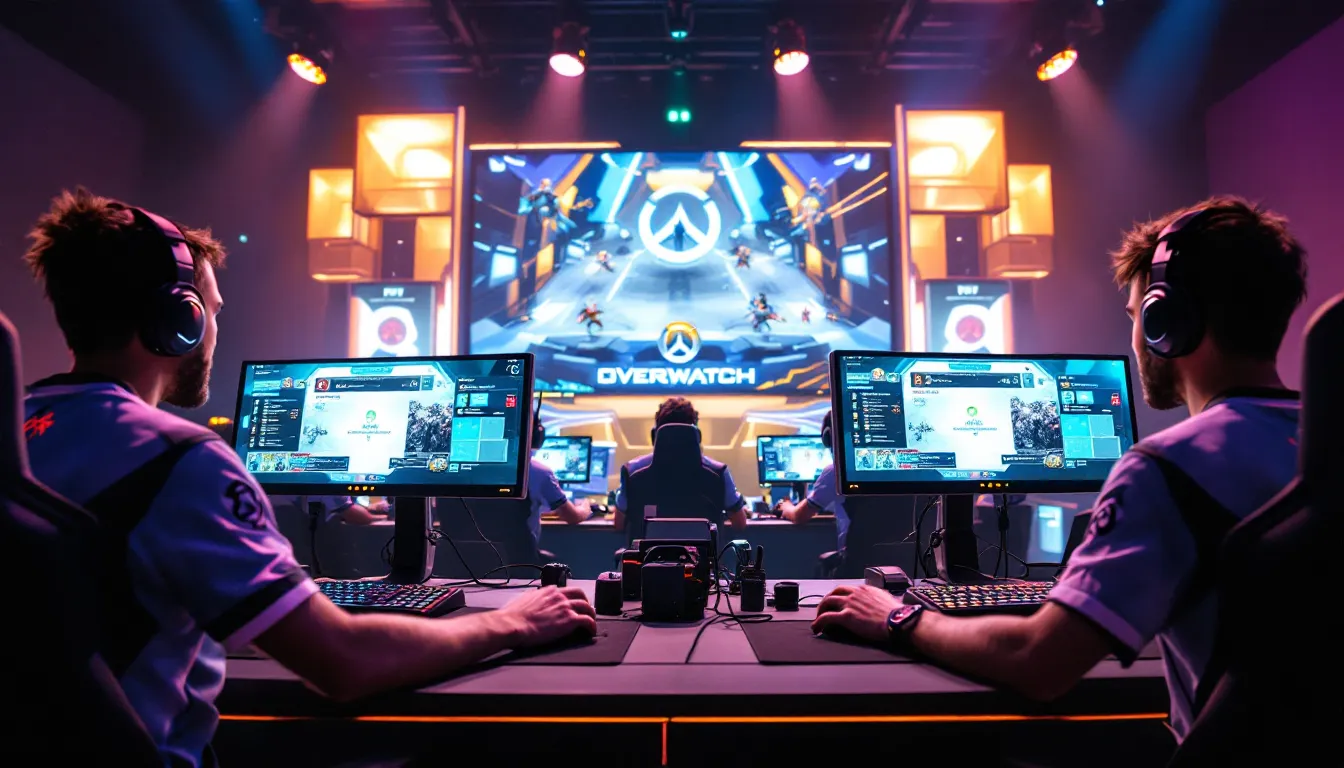
Overwatch 1’s competitive potential was obvious from day one. Blizzard didn’t stumble into esports success, they designed the game explicitly for competition. The rank system launched with Competitive Play available within weeks of release. The structured 6v6 format, clear objective modes (Capture the Flag, Control, Payload), and hero switching mechanics created moments that were infinitely watchable and replayable.
Streamers immediately recognized Overwatch 1’s potential. Unlike Dark Souls or story-driven single-player games, Overwatch matches told stories in real-time. A perfect team fight, a clutch Widowmaker headshot, an ultimate economy read that turned a losing fight into a win, these moments generated authentic hype. Twitch streams became packed with Overwatch content within weeks of launch. Professional esports organizations started signing players and teams almost immediately.
By late 2016, less than six months after launch, Blizzard announced the Overwatch League, a franchise-based esports league with a multimillion-dollar investment backing it. This wasn’t organic growth that surprised Blizzard: this was their plan all along. They’d built Overwatch with esports in mind: spectator-friendly UI, clear objective markers, distinct hero silhouettes for easy team identification, and passive design elements that made watching exciting even if you didn’t play competitively.
The OWL, which debuted in 2018, legitimized esports in ways that previous games had struggled to achieve. Teams like Seoul Dynasty, London Spitfire, and New York Excelsior attracted multimillion-dollar investments. Players like Jjonak, Pine, and Gesture became household names in gaming. Overwatch 1 wasn’t just a popular game, it was the foundation for modern franchise esports. Competitive gaming owes Overwatch 1 a debt that’s still being paid.
Game Modes And Content At Launch
Core Game Modes And Maps
Overwatch 1 launched with four core game modes: Assault (Capture the Flag-style point captures), Control (King of the Hill), Escort (moving a payload to a destination), and a hybrid of Assault/Escort. Quick Play was available for casual matching, while Competitive Play launched shortly after for ranked seasons. This variety ensured no match felt identical, the mode rotation kept gameplay fresh even when you played the same maps repeatedly.
The launch map pool included Hanamura, Temple of Anubis, and Volskaya Industries (Assault): Lijiang Tower, Nepal, and Oasis (Control): Route 66, Watchpoint: Gibraltar, and Dorado (Escort): and Hybrid maps like Numbani and King’s Row. Nine maps at launch was substantial, enough for variety, sparse enough that competitive players could master them all. Each map had distinct architecture, sightlines, and choke points that forced teams to adapt their hero selections.
Map design philosophy became critical to understanding Overwatch 1. Maps weren’t symmetrical deathmatch arenas like Quake or Counter-Strike. They were asymmetrical objective spaces where attackers and defenders had fundamentally different goals. Defending a Payload point on Route 66 meant setting up behind natural cover and funneling attackers into specific lanes. Attacking the same point meant coordinating pressure from multiple angles simultaneously. This objective focus gave Overwatch 1 tactical depth that pure deathmatch shooters couldn’t match.
Special event game modes rotated regularly. Lúcio Ball (a soccer-style elimination game) appeared during summer events. Capture the Rooster was a CTF variant. Mystery Heroes stripped players of hero selection and randomized your character every death, forcing adaptability. These limited-time modes kept the game feeling fresh even as the core rotation remained stable.
Initial Hero Roster
Overwatch 1 launched with 21 heroes split across three roles: Tank (6 heroes), Damage (7 heroes), and Support (5 heroes). The Tank lineup included Reinhardt, Tracer, D.Va, Zarya, Roadhog, and Winston. The Damage roster featured Tracer, Genji, Hanzo, Soldier: 76, Pharah, Reaper, and Widowmaker. Supports included Lúcio, Mercy, Symmetra, Zenyatta, and Ana.
Wait, Tracer’s listed twice, that’s because the role distribution was actually fluid at launch. Blizzard didn’t use the term “Damage” officially: heroes were just categorized loosely. Tracer was an offensive-focused character, but nothing locked her into a specific role the way role lock would later enforce.
Each hero felt complete from day one. Genji’s deflect and double-jump made him a mechanical skill check. Pharah’s rockets and hover let her occupy space enemy hitscan heroes couldn’t easily deny. Mercy’s resurrect made her the game’s most powerful support. Symmetra’s turrets and teleporter were game-changing utility. No hero felt like a placeholder or prototype. Even now, many of the launch roster remain viable. If you’re curious about the full evolution of these characters, Overwatch Game Reviews: Discover Gameplay Secrets and Winning Strategies breaks down how they’ve developed.
Balance was imperfect, Ana’s Sleep Dart was oppressive in early patches, Widowmaker could one-shot supports from across maps, and Roadhog’s hook range felt nonsensical. But Blizzard was agile about adjusting. Patch notes rolled out constantly, and the competitive meta shifted rapidly. Heroes nobody expected to be viable (like Zenyatta in early competitive) eventually became essential. The flexibility of the roster meant the meta had genuine depth rather than a strict tier list.
The Evolution Of Overwatch 1: Major Updates And Milestones
Seasonal Updates And New Content Drops
Overwatch 1’s post-launch roadmap was aggressive. Blizzard committed to seasonal content drops every few months, adding new heroes, maps, and balance changes on a predictable schedule. Season 1 of Competitive Play ran from June to August 2016, establishing ranked tiers (Bronze through Grandmaster) and seasonal rewards. New heroes followed: Ana in July 2016, Sombra in November 2016, Orisa in March 2017, Doomfist in July 2017. By year two, the roster had expanded to 26+ heroes, giving players genuinely difficult team composition decisions.
New maps maintained the variety. Eichenwalde (Hybrid) arrived in September 2016. Horizon Lunar Colony (Assault) came in June 2017. Junkertown (Escort) launched in August 2017. Each new map brought strategic wrinkles that forced competitive teams to develop entirely new playbooks. Eichenwalde’s tight chokepoints favored Earthshatter-heavy tank play. Horizon Lunar Colony’s verticality enabled Winston and D.Va to dominate early engagements. Junkertown’s long sightlines rewarded hitscan heroes like Widowmaker and McCree.
Event content became seasonal traditions. Lunar New Year, Halloween, Summer Games, and Overwatch Anniversary events rotated annually, each introducing limited-time modes, cosmetics, and loot boxes. Halloween 2016 introduced the Junkenstein’s Revenge PvE mode, a four-player cooperative horde-style game that proved Overwatch’s mechanics worked outside competitive 6v6. These events kept lapsed players engaged and gave invested players reasons to log in during content droughts.
Cosmetics evolved throughout Overwatch 1’s lifecycle. Skins, emotes, sprays, and highlight intros gave players expression without breaking game balance. Legendary skins completely changed a hero’s visual identity, Lifeguard D.Va, Officer D.Va, and Cruiser D.Va made the hero feel fresh even when her mechanics remained identical. The cosmetics monetization model was generous: you could earn loot boxes through gameplay, and seasonal rewards (Golden Guns purchased with Competitive Points) rewarded grind without feeling mandatory.
Balance Changes And Competitive Meta Shifts
Overwatch 1’s meta was never stagnant. Patch cycles adjusted hero power levels constantly, shifting which heroes were viable at different tiers. In early competitive, Lúcio was so dominant that essentially every team ran him. The “Protect the Widowmaker” comp of Season 1 relied on three dedicated heroes enabling one DPS carry. By Season 3, Ana had become the primary healer for competitive teams, and Lúcio shifted to a secondary support role for his speed boost utility.
Tank metas rotated regularly. The Reinhardt-and-tanks dominated early seasons. Then dive composition (Winston, D.Va, Genji, Tracer) became the standard, forcing map rotations around open spaces where dive heroes could excel. Then Orisa and Hog took over with a shield-and-hook playstyle. Then GOATS (three tanks, three supports) emerged and locked the meta into one oppressive team comp for over a year. Each shift required competitive players to relearn positioning, ult management, and team fight timing.
Balance patch notes became community events. Blizzard’s designers, particularly Kaplan, were transparent about changes and reasoning. When Mercy’s resurrect was changed from instant to channeled, the community understood why (instant rez was too forgiving). When Widowmaker’s damage was reduced, players accepted it because they recognized the data showing her pick rates were skewing match outcomes. This transparency built trust that balance changes were data-driven, not arbitrary.
The PTR became crucial for competitive integrity. Changes would appear on the test realm for weeks before live release. Pro teams and high-elo players would scrim with new changes, giving feedback that sometimes led to Blizzard reverting or adjusting mid-cycle. This iterative approach meant that by the time a patch went live, the community had theorycrafted its impact extensively. Overwatch Updates: What’s New and Exciting in Your Favorite Game? dives deep into how updates shaped the game’s evolution.
Some patches became legendary in community memory. The “Mercy Mains” meme spawned from seasons where Mercy was overpowered and necessary. The “Ana nerfs” were constant jokes as her win rate climbed even though multiple balance passes. The Bastion rework that made him a stationary turret was controversial for years. These meta shifts weren’t just balance tweaks, they were conversations between developers and community about what made the game fun and fair.
From Overwatch 1 To Overwatch 2: The Transition
When Overwatch 2 Launched And What Changed
Overwatch 2 launched on October 4, 2022, initially as a free-to-play title (versus Overwatch 1’s $60 price tag). The transition was controversial. Blizzard didn’t release Overwatch 2 as a separate game: they replaced Overwatch 1 entirely. If you owned Overwatch 1, you logged in one day and the game had been updated into Overwatch 2. Servers for Overwatch 1 were shut down, with no option to play the original version.
The changes between Overwatch 1 and 2 were substantial. The core shift moved from 6v6 to 5v5 gameplay, removing one tank per team. This dramatically altered the meta. Double-shield compositions (two tanks, both with shields) became mathematically impossible. The game became faster, more aggressive, and less forgiving of positional mistakes. Tanking became significantly more demanding, one tank had to fill a role that two had previously shared.
Hero redesigns accompanied the transition. Symmetra went from a support with turrets to an off-damage hero. Doomfist was redesigned from a DPS to a tank. Bastion became mobile instead of anchored. These reworks weren’t nerfs or buffs, they were fundamental reimaginings of how heroes functioned. Veterans of Overwatch 1 had to unlearn years of mechanical knowledge about these heroes.
The free-to-play model opened the floodgates for new players. Overwatch 2 immediately spiked to 35 million players in its first month. But, the monetization became more aggressive. Cosmetics that were once available through gameplay now required Battle Pass progress or direct purchase. Golden Guns, the ranked currency reward, became harder to acquire. This shift from premium-to-cosmetics to free-to-play-with-aggressive-monetization was a controversial cost of entry.
Impact On The Original Game’s Legacy
Overwatch 1’s shutdown was sudden and without ceremony. Players who’d invested six years, thousands of hours, and hundreds of dollars into cosmetics suddenly had their game replaced. There’s no “classic Overwatch 1” option available anymore. The game exists only in highlight clips, tournament VODs, and community memory.
This shutdown crystallized debates about digital ownership. If you bought Overwatch 1, did you own the game, or did you own the right to play it as long as Blizzard maintained servers? The answer, according to the live service model Blizzard embraced, is the latter. This conversation ripples through gaming still, what happens to games when publishers decide to move on?
Competitively, Overwatch 1’s legacy shifted. The Overwatch League, which had built an entire esports infrastructure around 6v6 GOATS metas and double-shield metas, had to completely rebuild. Teams that had mastered Overwatch 1 tank synergies suddenly had fundamentally different jobs. Players who’d spent years on one hero had to adapt or retire. The OWL’s transition was rocky, viewership dropped, some franchises folded, and the competitive scene struggled to regain momentum.
Culturally, though, Overwatch 1 remains legendary. Speedrunners still play it through emulation. Community members have reverse-engineered private Overwatch 1 servers. The esports community maintains VOD libraries and commemorates legendary moments. Overwatch 1 was the first game where Blizzard truly dominated esports infrastructure, and that legacy doesn’t disappear just because official servers shut down. The international esports infrastructure Overwatch 1 pioneered, franchise leagues, player salaries, sponsorship models, became the blueprint for Valorant, CS:GO, and other competitive shooters. If you’re interested in how the competitive esports scene evolved, Overwatch OverwatchLeague: The Future of Esports and Community Engagement covers the organizational side extensively.
Overwatch 1’s Lasting Legacy In Gaming
Cultural And Competitive Impact
When Overwatch 1 launched on May 24, 2016, hero shooters barely existed as a category. By the time it was shut down on October 4, 2022, the entire gaming landscape had shifted. Valorant, Apex Legends, Paladins, and dozens of other shooters explicitly copied Overwatch 1’s hero-based formula. The genre wouldn’t exist without Blizzard proving it was viable and profitable.
The competitive legitimacy Overwatch 1 established transformed esports. Before the Overwatch League, esports was fragmented, Counter-Strike had huge international appeal but operated through third-party organizers. League of Legends had franchises but existed within a single ecosystem. Overwatch League was the first major franchise-based esports league backed by a game publisher with a multibillion-dollar entertainment company behind it. This model became the standard. Every major esports title now mimics the franchise league structure Overwatch pioneered.
Streamers like Pokimane, Sykkuno, and xQc built their early audiences on Overwatch 1 content. The game’s visual clarity and real-time narratives made it spectator-friendly in ways that other shooters weren’t. A new viewer could tune into an Overwatch stream and understand what’s happening within seconds, red team (Widowmaker, Ana, Mercy) versus blue team (Winston, D.Va, Lúcio). The distinct hero silhouettes and ability effects made the game comprehensible to outsiders, which traditional deathmatch shooters lacked.
The esports ecosystem that grew around Overwatch 1 spawned careers. Players like Jjonak went from Korean ladder grinder to OWL millionaire. Coaches, analysts, and content creators built industries around the game. Esports bars opened with Overwatch 1 matches on screens. Investment firms bought stakes in OWL franchises at valuations reaching $35 million. When Game Informer covered Overwatch’s esports rise, it was documenting a genuine cultural shift toward legitimizing gaming as a spectator sport.
Why Overwatch 1 Matters Today
Oven though Overwatch 2 replaced Overwatch 1, the original game’s influence remains omnipresent. Every hero-based team shooter released today owes intellectual debt to Overwatch 1’s design philosophy. Valorant’s economy system, ability-based gameplay, and character distinction all trace ancestry to Overwatch. Apex Legends’ legend selection and ult economy borrowed Overwatch’s framework wholesale.
The esports infrastructure Overwatch 1 built still matters. Franchised esports leagues, player salaries, sponsorship deals, and media rights negotiations, all standard now, were proven viable through Overwatch League’s success. Other games could launch with confidence knowing the market existed because Overwatch had already established it.
Competitively, Overwatch 1 answered questions that were debated before its launch: Can a team shooter with asymmetrical heroes create fair competitive play? Can objective-based gameplay be more compelling than deathmatch? Can cosmetic monetization work without pay-to-win mechanics? Can esports be mainstream entertainment? Overwatch 1 answered “yes” to all of them, and that definitional moment changed everything.
For current gamers curious about gaming history, Overwatch 1 represents the exact moment team-based competitive gaming shifted from niche to mainstream. The May 24, 2016 launch date marks a before-and-after split in how publishers approach multiplayer design. Games released before Overwatch 1 often felt like they were discovering principles that Overwatch took for granted. Games released after could learn from Overwatch’s success.
Fans can still experience Overwatch 1 through tournament VODs and community content. The strategic depth, the hero variety, the meta evolution, it’s all preserved in digital memory even if the servers are offline. VGC and GameSpot maintain archives of Overwatch League matches and coverage that document how the competitive scene evolved. For anyone interested in esports history or game design philosophy, Overwatch 1 is essential study material.
The game’s shutdown also inspired important conversations about digital preservation, esports longevity, and what happens when live service games end. Those conversations matter beyond gaming, they’re about how we preserve digital culture and who owns the things we buy online. Overwatch 1 won’t return, but its impact extends far beyond any single game.
Conclusion
Overwatch 1 launched on May 24, 2016, and in that moment created a template that gaming followed for the next six years. It proved that hero-based shooters could be balanced, competitive, and mainstream. It established that esports franchising was viable at massive scale. It showed that cosmetic monetization could fund game development without compromising competitive integrity.
When it was replaced on October 4, 2022, Overwatch 1 ceased to exist as a playable game. No official servers, no emulation, no legacy mode. That closure was controversial, but it doesn’t diminish what the game accomplished. Every hero shooter since, every franchise esports league, every game designing around accessibility-plus-depth, they’re all descendants of Overwatch 1’s innovations.
For gamers who lived through its six-year lifecycle, Overwatch 1 represents golden-age competitive gaming. The meta was always shifting. New heroes arrived regularly. Balance patches felt like conversations between developers and players. The esports scene grew from nothing into a legitimate sport with multimillion-dollar franchises. That journey mattered.
Today, when you launch Overwatch 2, you’re playing the game that replaced Overwatch 1. The 5v5 format, the redesigned heroes, the free-to-play model, they’re all responses to what Overwatch 1 taught Blizzard worked and what needed improvement. Understanding what Overwatch 1 was, when it launched, and why it mattered gives context to everything competitive gaming became after May 2016.